MORA in the Trees

MORA in the Trees
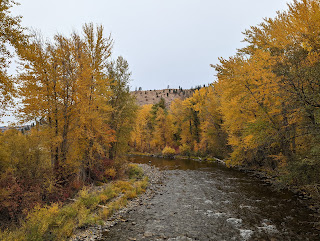
Mt. Rainier through a variable retention harvest at Pack Forest, Washington, USA

Friday, May 17, 2013

@F1000Research, another #OpenAccess journal publishing in ecology

In response to my recent posts on open access journals (here and here), I received a kind email from Michael Markie at Faculty of 1000 pumping up their new journal, F1000Research. The first thing I noticed was that their name sounds like an American-made pick-up truck, but one designed for academics. The second thing that I noticed was their business model and form of review and publication. It appears that one submits an article, and the accompanying data and it is published internally as an F1000Research manuscript with very basic review. Following this initial review, the data and manuscript will go out for peer review, and upon sufficient peer approval (which is also made openly available), the article is revised as reviewers recommend and made freely available, indexed with the major players of academic indexing. F1000Research also accepts data articles and negative results, offering free submission of negative results through August, in addition to the usual submission rates for other more traditional communications. I really, really like that all articles include the full data as right now I am a member of three different independent data/code/research archiving sites. If the trend of journals requiring data to accompany submissions picks up, pretty soon all journals will require full data, not just ESA journals who merely encourage data placement into Ecological Archives.


Way down below is the full text from Michael's correspondence. It seems that like PeerJ, they're actively soliciting submissions to earn their market share in the open access world. It also seems that the early days of open access journals are a make-or-break time, so it will be interesting to see if F1000's other popular products (namely F1000Prime, which sounds like a space robot) will generate interest in this new and intriguing open access venture. In the name of open science, I am excited to see new entries into the market (for now), but I realize that ecologists may grow tired of journals that publish in all branches of science rather than disciplinary or subdisciplinary open access ecology journals like Ecosphere or Riparian Ecology and Conservation.

See Michael's introduction below for more details on their product and links to a few papers:


Dear Nate,

I hope you are well, I have just been following your blog as of late and noticed you are interested in open access journals that publish on topics in ecology, and thus I would like to throw our journal F1000Research into the ring!
I’m not too sure how familiar you are with F1000Research (http://f1000research.com/) our new open access journal? We officially launched at the start of this year and have published nearly 200 articles to date. As the first Open Science journal for life scientists (see our Open Science statement), we offer significant advantages to authors that differ from other Open Access publisher’s such as PLoS One and BioMed Central (see http://f1000research.com/submit for details). 
The main differences from us and traditional OA journals apart from our completely transparent, post publication peer review system is the speed in which we publish articles (normally in under 14 days) and the wide range of article types we accept that other journals traditionally don’t (negative/null findings, data-only articles etc.). We also ensure that research is always accompanied by the complete dataset on which they are based, provided in a form enabling confirmation or reuse of the data by other researchers. These are all new facets of publishing that have excited the scientific community thus far. The F1000Research advisors and Board members include big Ecology names such as Simon Levin, Harold Mooney, Kevin Gaston and many more -  see the full list of Advisory Panel (http://f1000research.com/advisory-panel) and Editorial Board (http://f1000research.com/editorial-board).

We have had some really well accessed and popular ecology papers so far:


So as we are currently encouraging people to try out our new publication model, we would be delighted to offer you a free submission to the journal to try us out. If this is of interest to you then please let me know.

Regards

Michael

Michael Markie
Acquistions Editor, F1000Research
Editor, F1000Posters

Thursday, May 16, 2013

Indicator Species Analysis for bioassessment: part one Dufrene-Legendre ISA

I have long been a fan of indicator species analysis for bioassessment and identifying trends in experimental treatment groups. There are many applications of indicator species analysis (ISA) in both applied and basic research, and there is myriad free software to allow everyone in government or the non-profit sector to learn about both classical Dufrene-Legendre ISA and alternative methods for identifying species thresholds and multiple group membership.

The initial concept of indicator species analysis was to develop a statistical method to develop "indicator species" that occur under certain environmental conditions or in certain communities - both goals of ecology and conservation. The math behind this method is also extremely simple - for a given species, calculate the product of the relative abundance and relative frequency for a given group. A higher value is more indicative of a better "indicator species" for a given group. Some software multiply this value by 100, scaling the values from zero (non-indicator) to 100 (perfect indicator), while others do not creating a range between zero and one. The strength of this association is then tested with Monte Carlo simulations to calculate a probability value for that indicator species in a given group relative to that indicator species in other group combinations.

The original 1997 Ecological Monographs paper by Dufrene and Legendre is where one should start investigating ISA. It starts by discussing the statistical firepower of that era that helped ecologists decide where to prune a dendrogram from cluster analyses. They quickly develop a case that using ordination to enumerate clusters is a subjective slope in need of some rules. McGeoch and Chown (1998) quickly ran with the idea that this could be applied to other ecological contexts, like a priori treatment groups.


Jon Bakker authored a 2008 paper in the Journal of Applied Ecology (freely available) on improving the utility of indicator species analysis that suggests using meta-analytical techniques, using exact permutations and potentially simplifying ISA to presence-absence can make ISA much more flexible.

These papers provide just enough background to make someone dangerous. They provide full context on the rationale and methods used to assign indicator values to treatment groups or algorithm-derived clusters. Next time I'll break out two newer methods, the controversy that one of them has recently generated and some R links and code from one of my recent papers. Since I'll be moving fast, I can't help but recommend Legendre and Legendre's Numerical Ecology and Borcard et al.'s, Numerical Ecology with R as great references for many things multivariate and ecological.

Wednesday, May 15, 2013

#SWS2013 Full Program Released


The Society of Wetland Scientists has released the full schedule for their 2013 national meeting in Duluth, MN. I haven't made my full meeting schedule yet, but there seem to be plenty of great talks on the docket, including two 2013 SWS-PNW scholarship award winners. I'm excited to be giving a talk and participating in the Society's undergraduate mentoring program as a mentor, as well as just seeing old friends and acquaintances.

Although unanticipated, it's nice to see that Utah State University has a large contingent representing the Watershed Sciences department. It's also nice to see that the semi-obscure location has not deterred many heavy hitters from attending the meeting. Perhaps the upper Midwest provides a home field advantage for wetland science or perhaps people really, really want to go to Duluth. I guess SWS couldn't be exactly like ESA (Minneapolis, MN) or SER (Madison, WI) this year, so we added an extra connecting flight to the itinerary.


Saturday, May 11, 2013

Salmon Confidential - where have Canada's salmon gone?

If you weren't already worried about watershed-scale habitat losses, incidental take from massive hydropower dams, and a lack of fish access to historic spawning and rearing grounds, today I stumbled across Salmon Confidential:


Salmon Confidential from Twyla Roscovich on Vimeo.

It's about an hour, but shows how the biological stressors of industrial salmon farming are likely the next big game changer in addition to the three Hs: hatcheries, harvests and hydropower. The Canadian handling of this situation reminds me of when a few prominent U.S. scientists claimed that dams had no effect on salmon decline in conflict with abundant evidence otherwise.

This is in addition to the week's other big news, we're now living in a 400ppm world, and we aren't likely to turn it back anytime soon... Sorry for the Saturday morning morale reduction.

Thursday, April 25, 2013

Thursday Links: Structural equation modeling resources for ecologists

I've recently jumped into the world of structural equation models (SEM) as I try to model direct and indirect drivers of fish habitat in the Columbia and Missouri River basins. While I have tried to stay current on the analytical methods being used in ecology and environmental science, I have only recently found myself saying, "there's a statistically measurable effect of B on A and A on C, but we intuitively know that variable A is only correlated to variable B, and C is the actual process driving the system..." What do I do, build some models and then use AIC to pull out the best model, accepting correlations as surrogate causes? Or do I try to decouple those direct and indirect effects? Fortunately for me and others who have response variables that are driven by seemingly direct and indirect effects, SEM provides the framework for testing composite hypotheses in theoretical models.

A case for SEMs in ecology: decoupling multiple lines of evidence can be difficult
SEM has been made popular by numerous books on the topic, but only recently have SEM methods become somewhat common in the statistical literature. Within R there are numerous packages to implement structural equation models. I have found lavaan, which has very thorough documentation and teaching materials, to be quite user-friendly. The SEM package is less well-documented and somewhat less convenient to implement, but has a nice, freely available book chapter by John Fox to accompany the SEM R package documentation

There are numerous free resources that explain how SEM can be used, include those works listed in James Graces' structuralequations.com, a recent paper in Ecosphere by Grace et al., Grace's website which includes a link to his 2006 book (not free), and the SEM website and SEM GitHub of Jarrett Byrnes. From these links, you can start to develop a library of code, example models, and documentation on how SEMs work both theoretically and technically. Oh, and Bill Shipley has a book on SEMs and path analysis.

I would be excluding a serious portion of the literature on SEMs were I to say that there are not prominent doubters of SEM approaches. Dynamic Ecology's Jeremy Fox is among them as he outlines in this 2012 post that received many lengthy replies akin to this piece by Jay-Z. Additionally, Andrew Gelman has worked to clarify the utility of SEMs in his recent comment on the comments that arose in NeuroImage.


Thursday, April 11, 2013

Thursday Links: E.O. Wilson pisses everyone off and I like math

So, you may have seen that E.O. Wilson, purveyor of ants, biodiversity and conservation, has the  internet all up in arms about using sliderules and number machines and whatnot. Apparently, math is technical and what the world needs is more idea people. I won't bother to write my own reply to E.O. as it seems 75% of the Ecolog listerv already has and Jeremy Fox et al., have covered the issue very thoroughly over at Dynamic Ecology. I especially like their Fisher vs. Wilson post.

While, I as the holder of a BA in environmental studies, am an unlikley proponent of quantitative ecology, I can't help but think how far research has gotten based on the mathletic among us. In 2013 I can use open source tools to mine incredibly dense data and identify patterns or model processes like no other generation of researchers has ever been able to. Statistics, programming and calculus may be difficult, and they may not directly grow non-mathematical disciplinary knowledge (e.g. economics, biology), but damn, would it be hard to build testable conceptual models of complex systems if we were still looking up Z stats in tables and hand calculating t-tests. Basically, science has evolved to do a better job of answering complex questions with contemporary methods. These math skills are not a substitute for good questions, but it shows that in 2013, good questions alone probably won't equate to success like they did for E.O. back in '49.

Instead of jumping further into the mix on this one, I will politely refer you to the R-project which just released version 3.0 last week. R-bloggers has a tutorial on how to update and retain functional packages.

Once you get that R 3.0 up and running, have a look at the WEE Ecology group's open access pre-print on sharing data. It's a clear read and great introductory stuff for anyone hoping to house their data in a public repository.

In unrelated news, 420-pound wrestler Chris Taylor went for a ride back in 1972.


I provide this as a metaphor for...something tangentially related to the above content. Here it is:

Friday, April 5, 2013

#OpenAccess journals in ecology - what's out there?

I'm attempting to compile an exhaustive list of open access journals that publish on topics in ecology, conservation, environmental management, etc. What are the smaller and up-and-coming OA journals out there? Everyone knows about PLoS One, Ecosphere and now PeerJ, but what would an academic library-free land manager read? Where would a scientist from a less-developed country find science that they can access without having to email the author for a pdf? Where are the applied and/or ecosystem specific journals? Get at me here, on twitter or via email with any open access titles that may be disciplinary, entirely applied or even just slightly esoteric.

Eventually I intend to compile my list of OA journals into a website that complements an article I'm working on this spring.